Summary
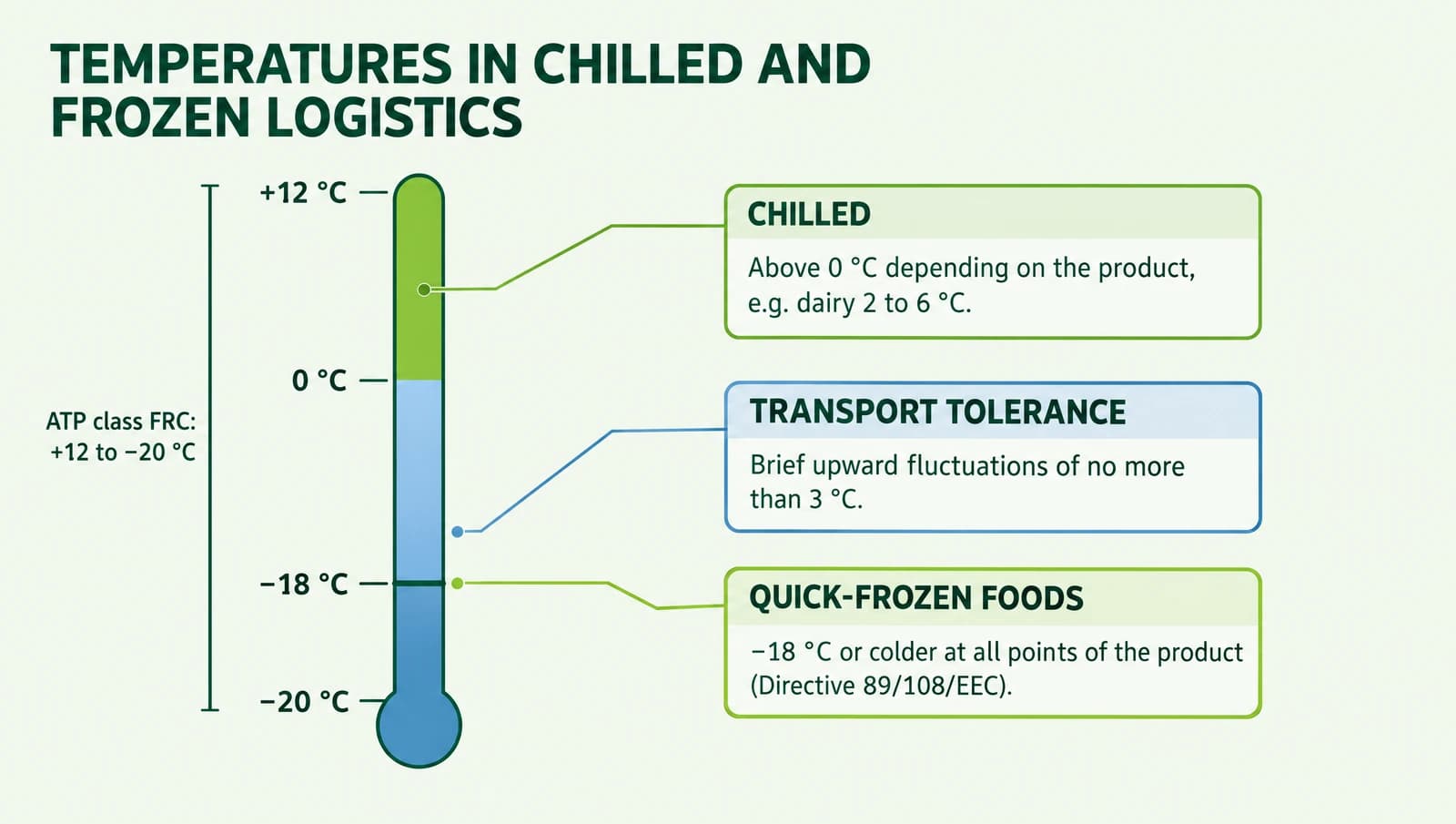
Frozen logistics is the storage and transport of goods below freezing point. Under EU Directive 89/108/EEC, quick-frozen foods must be kept at −18 °C or colder at all points of the product, with only brief upward fluctuations of no more than 3 °C allowed during transport. Temperatures must be recorded with compliant instruments and the records kept for at least a year. A frozen logistics partner therefore needs cold storage, refrigerated trailers and documented monitoring of the whole cold chain.
What frozen logistics is
Frozen logistics covers every step frozen goods go through between the manufacturer and the store: receipt into cold storage, storage, picking, loading, transport and handover. The aim is that the product never rises above the permitted temperature at any step. This is known as an unbroken cold chain.
It differs from chilled logistics mainly in temperature and sensitivity to fluctuations:
| Chilled logistics | Frozen logistics | |
|---|---|---|
| Temperature | above freezing, depending on the product (dairy usually 2 to 6 °C) | −18 °C or colder for quick-frozen foods |
| Typical goods | dairy, meat, delicatessen, fruit and vegetables | frozen vegetables, fish, meat, ready meals, ice cream, bake-off bread |
| Risk if the temperature rises | shorter shelf life, lower quality | partial thawing and loss of quality, which often means the goods are written off |
What the regulations require
The basic rules for quick-frozen foods are set by Council Directive 89/108/EEC:
- The product temperature must be kept at −18 °C or colder at all points of the product.
- Brief upward fluctuations of no more than 3 °C are allowed during transport.
- The same 3 °C tolerance applies to local distribution and retail display cabinets. Member states may allow up to 6 °C for retail display cabinets.
In the Czech Republic the directive is implemented by Decree No. 366/2005 Coll. on requirements for certain frozen foods, which covers storage, handling and transport requirements.
Temperature monitoring is governed by Commission Regulation (EC) No 37/2005:
- Means of transport and storage must be equipped with measuring instruments that comply with EN 12830, EN 13485 and EN 13486.
- Temperature records must be dated and kept by the operator for at least one year, or longer depending on the nature and shelf life of the products.
- In storage, the air temperature must be measured by at least one easily visible thermometer.
For international road transport, the ATP Agreement on the international carriage of perishable foodstuffs applies. It classifies refrigerated equipment, and frozen foods use class FRC: mechanically refrigerated equipment able to hold a temperature anywhere from +12 °C down to −20 °C.
What a cold storage warehouse has to handle
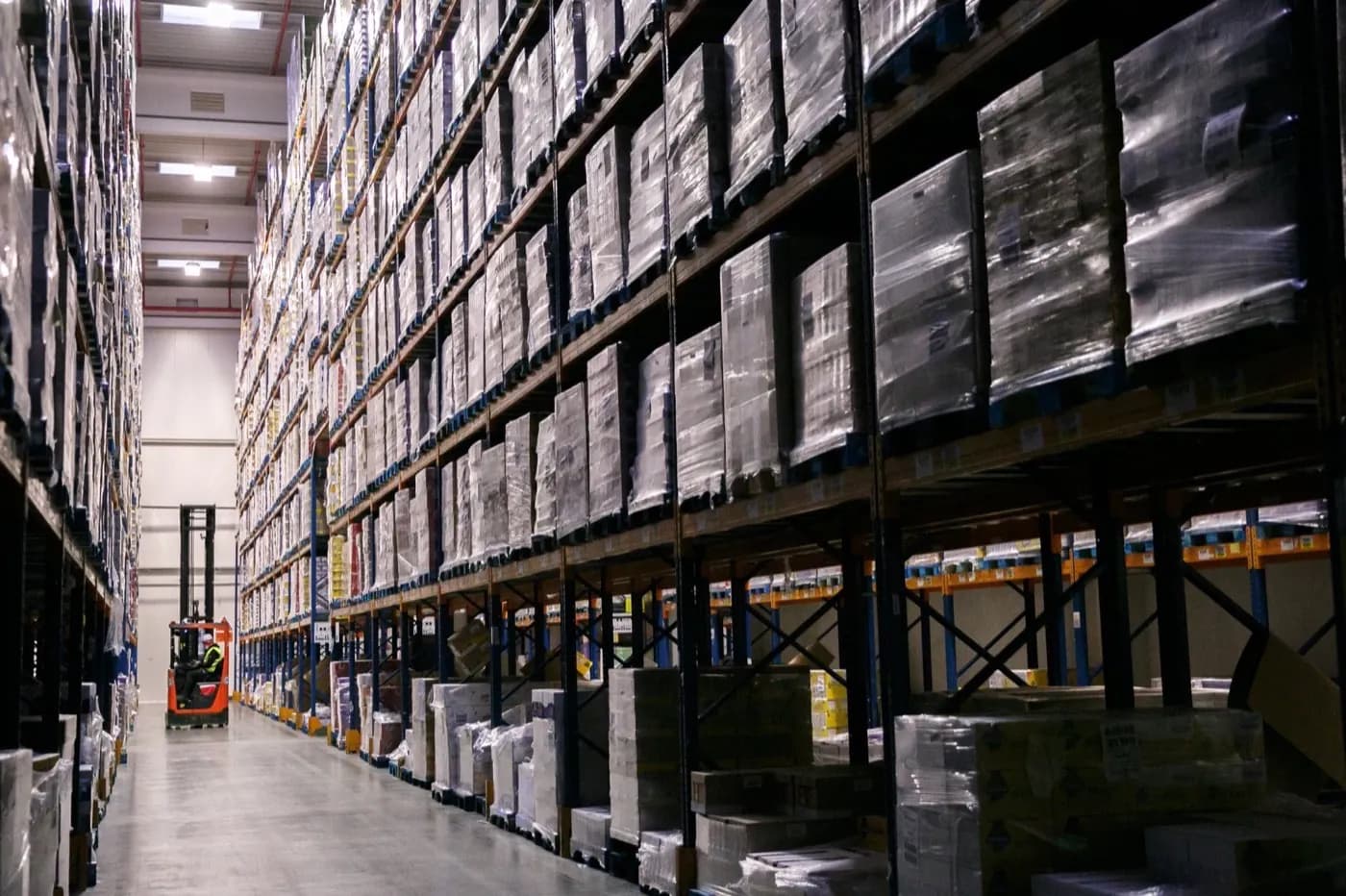
A cold store has to hold the temperature not only in the racks but wherever the goods move. The loading dock is the critical point: every minute a pallet spends outside the frozen zone increases the risk of exceeding the permitted tolerance. A well-run operation therefore covers:
- fast transfers between trailer and cold store without unnecessary waiting,
- continuous temperature monitoring in every zone and archived records,
- clear procedures for refrigeration failures or power outages,
- separate temperature zones so frozen and chilled goods do not affect each other,
- food safety certifications such as IFS Logistics, plus organic (BIO) certification for organic products.
Transporting frozen goods
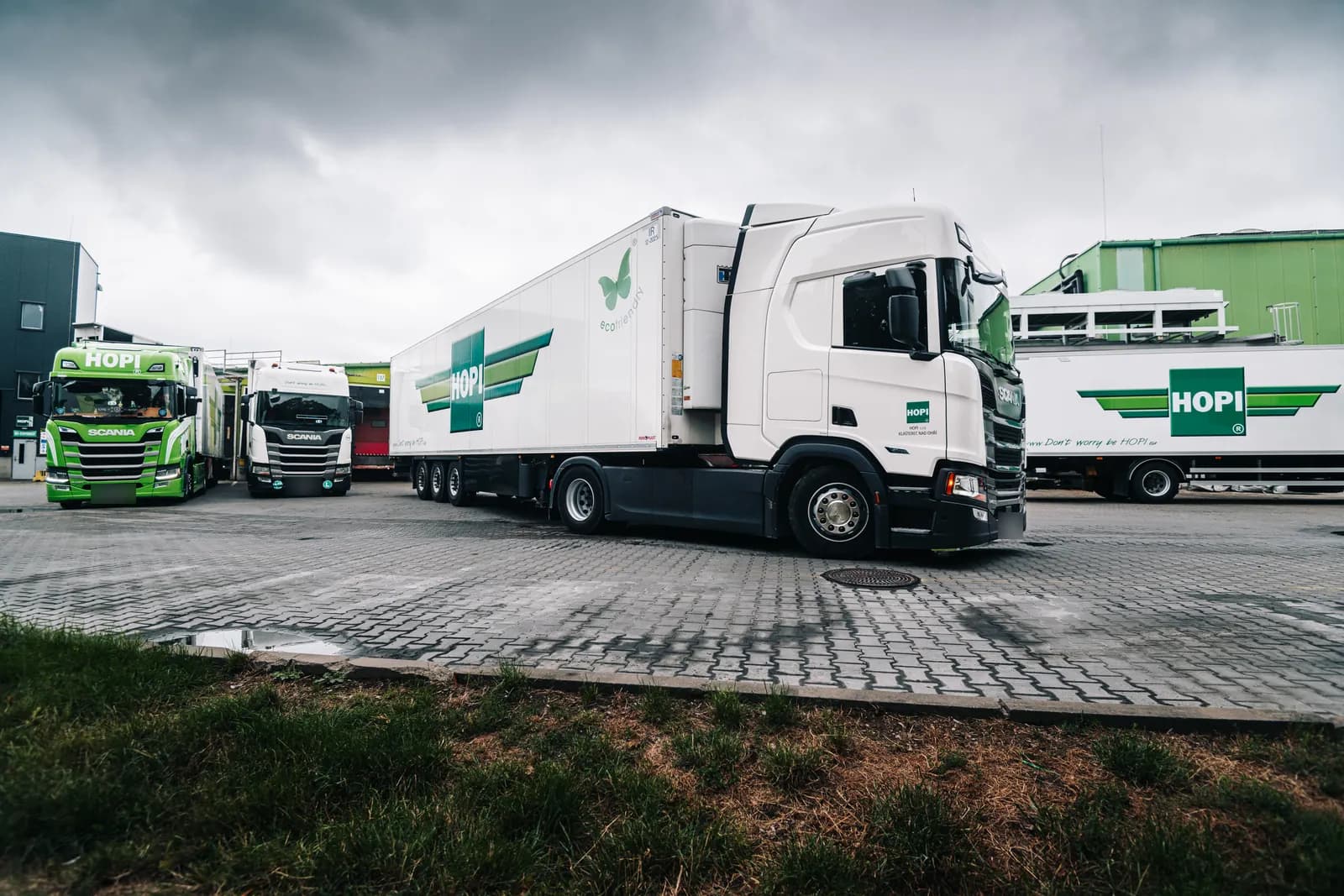
Frozen goods travel in refrigerated trailers with a refrigeration unit. The trailer is pre-cooled to the required temperature before loading, so the goods never enter a warm space. During the trip the unit holds the temperature and a recorder logs it, so at handover the carrier can show the cold chain was not broken. The unit also has to keep running while the truck waits at loading and unloading.
Common risks in frozen logistics
- A broken chain at the dock: long waits, open doors, badly timed deliveries.
- Missing or incomplete records: without them, correct handling cannot be proven in a claim or an inspection.
- Peak season capacity: frozen volumes rise before Christmas and free cold storage space disappears quickly.
- Mixed loads: if one vehicle carries several temperature regimes, it must keep them reliably separated.
How to choose a frozen logistics partner
Handing storage and transport over to an external partner is the 3PL logistics model. For frozen goods, these are the points worth checking:
- Does it have cold storage in the locations you need to supply your customers from?
- Does it also provide transport with its own refrigerated vehicles, so one partner is responsible for the whole cold chain?
- Can it provide temperature records from both storage and transport?
- Does it hold food safety certifications (IFS Logistics, BIO) and have retail experience?
- Can it handle chilled and ambient goods in the same network if your range is wider?
- How does it handle seasonal peaks and extra capacity?
Frozen logistics at HOPI Logistics
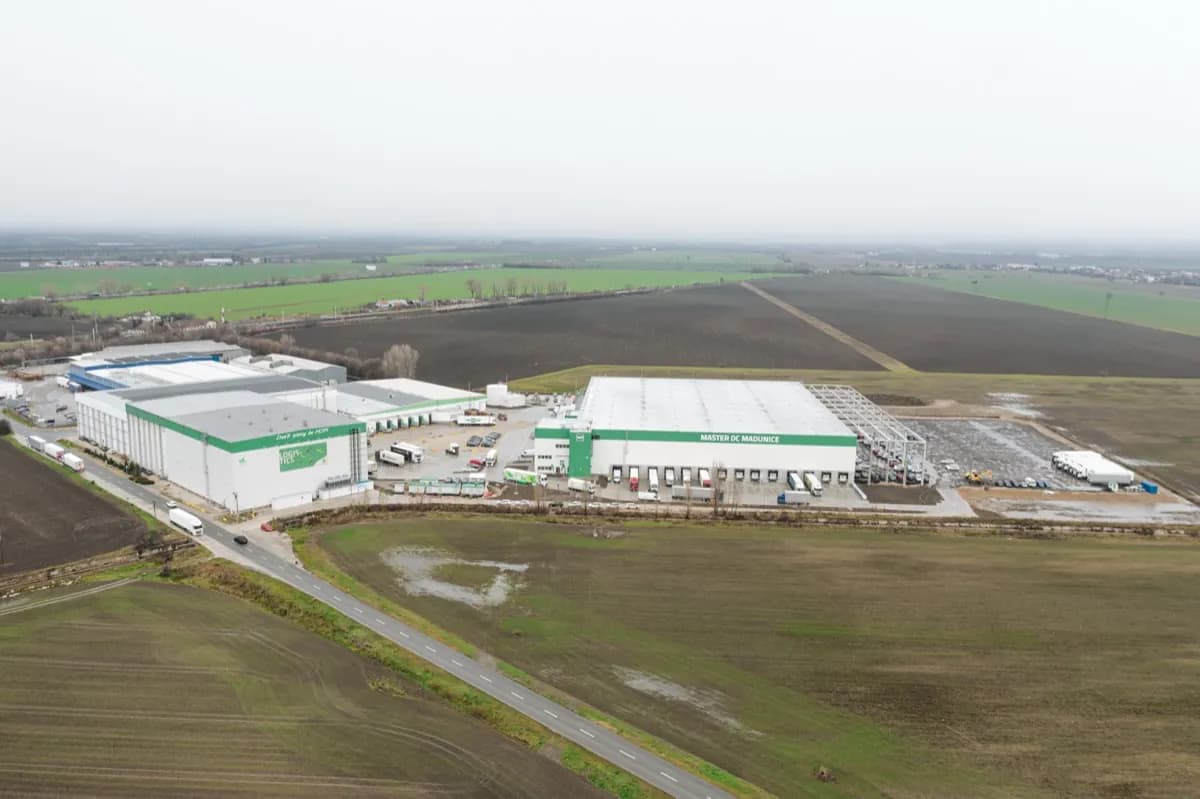
HOPI Logistics offers frozen storage in six distribution centres in three countries:
| Country | Distribution centres with frozen storage |
|---|---|
| Czech Republic | Jažlovice (near Prague), Prostějov |
| Slovakia | Madunice, Prešov |
| Hungary | Gyál, Vecsés |
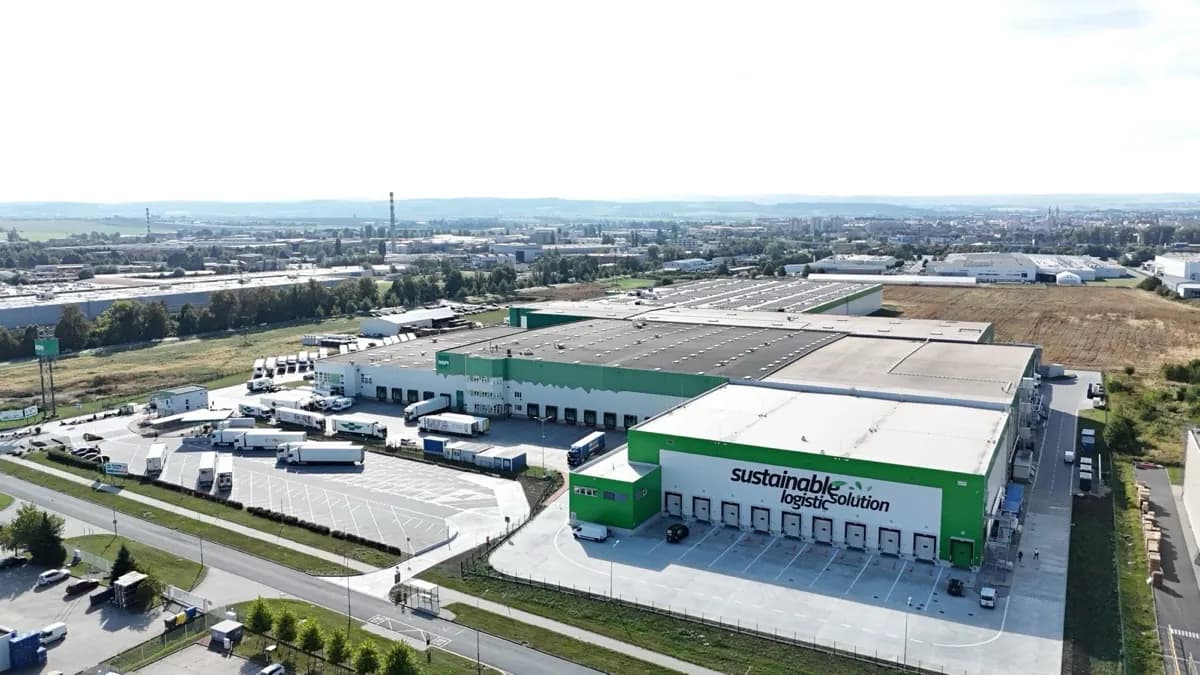
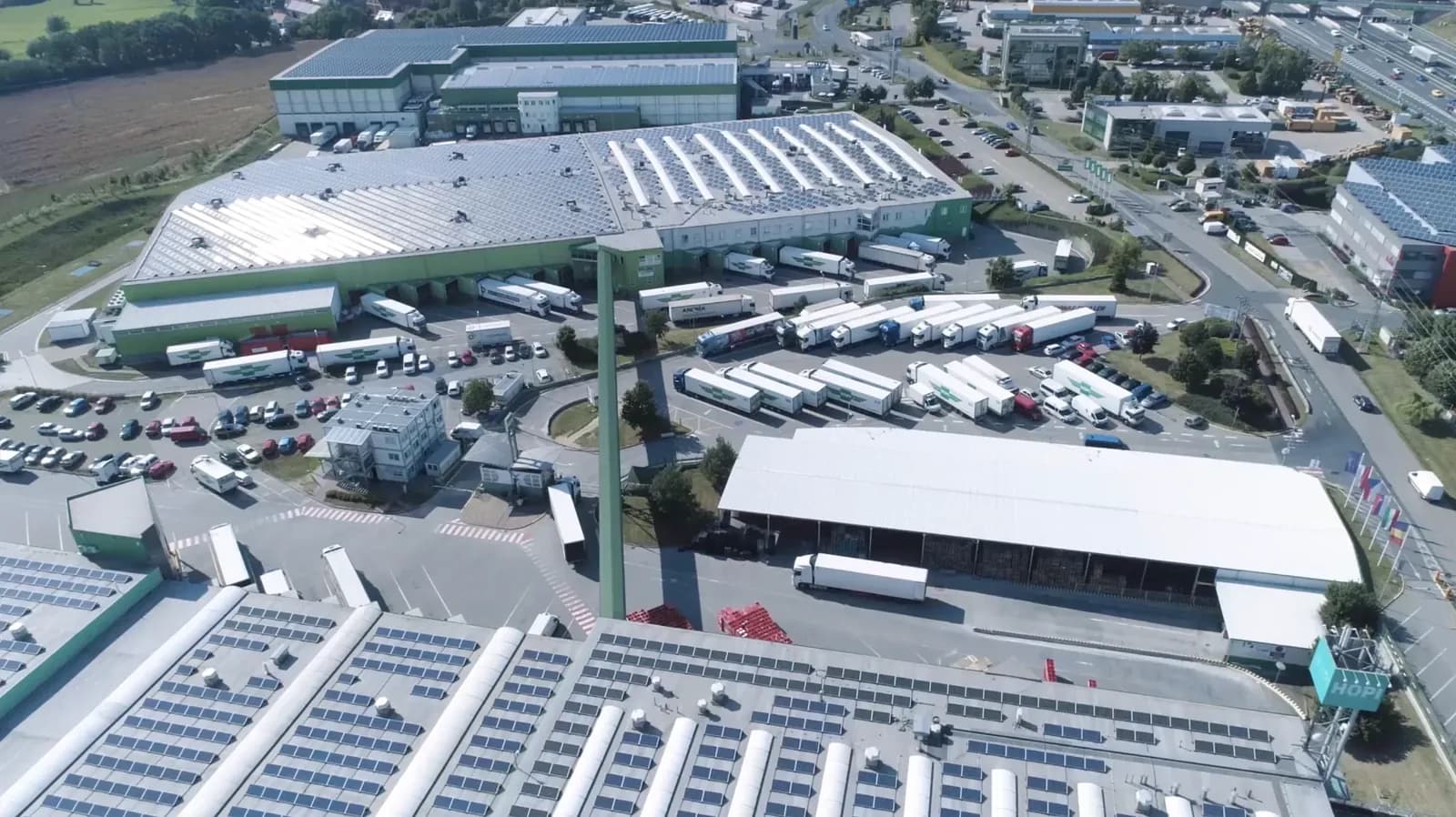
Chilled storage is also available in Klášterec nad Ohří, Senec, Szigetszentmiklós, Mszczonów, Sochaczew and Łódź. In total we run 16 distribution centres in five countries and more than 500 trucks, so we can handle both storage and transport of frozen goods within one network.
Our Czech distribution centres in Jažlovice, Prostějov, Strančice and Klášterec nad Ohří hold both IFS Logistics and BIO certification. Food retail makes up a large share of our customers. For Hollandia yoghurts, for example, we have handled the complete chilled flow at 2 to 6 °C to stores in the Czech Republic and Slovakia since 2018.
Need warehousing or transport for frozen goods in the Czech Republic, Slovakia or Hungary? Contact us or request a quote.
FAQ
At what temperature are quick-frozen foods stored?
Under Directive 89/108/EEC, at −18 °C or colder at all points of the product. Brief upward fluctuations of no more than 3 °C are allowed during transport.
How long must temperature records be kept?
Under Regulation (EC) No 37/2005, for at least one year, or longer depending on the nature and shelf life of the products.
Which ATP class is used for frozen goods?
Frozen foods are carried in class FRC refrigerated equipment, rated from +12 °C down to −20 °C.
What is the difference between chilled and frozen logistics?
Chilled logistics keeps goods above freezing at a temperature set for each product. Frozen logistics works at −18 °C or colder and is more sensitive to any break in the cold chain.
Where does HOPI Logistics offer frozen storage?
In six distribution centres: Jažlovice and Prostějov (CZ), Madunice and Prešov (SK), Gyál and Vecsés (HU). See all distribution centres for the full network.
Sources
- Council Directive 89/108/EEC on quick-frozen foodstuffs (EUR-Lex): eur-lex.europa.eu/eli/dir/1989/108/oj
- Commission Regulation (EC) No 37/2005 on temperature monitoring (EUR-Lex): eur-lex.europa.eu/eli/reg/2005/37/oj
- Czech Decree No. 366/2005 Coll. on requirements for certain frozen foods (in Czech): www.epravo.cz/top/zakony/sbirka-zakonu/sb/2005/366